Cart 0 items for £0.00

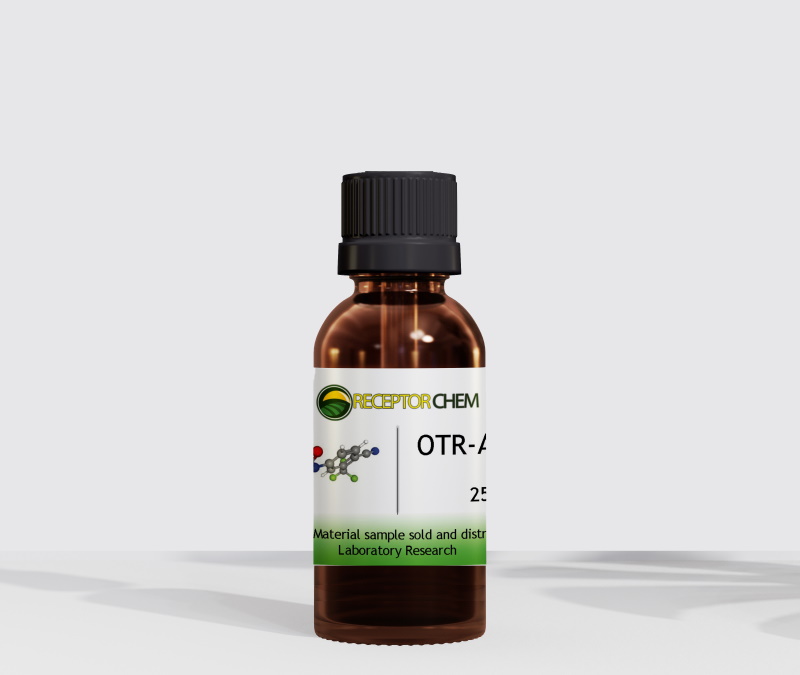
OTR-AC (MK-29, Ostarine-O-Acetate )

Sale!

OTR-AC (MK-29, Ostarine-O-Acetate )

Product Information

Original price was: £47.99.Current price is: £29.99.

Next-Generation SARMs: OTR-AC (MK-29, Ostarine-O-Acetate)

OTR-AC (MK-29, Ostarine-O-Acetate) is an esterified derivative of the classical selective androgen receptor modulator (SARM) Enobosarm (MK-2866/Ostarine). By attaching an acetate ester group to the hydroxyl functional group of the parent molecule, OTR-AC alters the pharmacokinetics, lipophilicity, and metabolic stability of the compound. Designed strictly for laboratory investigation and analytical research, it serves as a valuable tool for studying androgen receptor (AR) kinetics, tissue-selective anabolic signalling, and esterase hydrolysis rates in cellular models.

Technical & Product Specifications

  • Volume / Quantity: 30ml

  • Concentration: 25mg/ml (30  25mg)

  • Purity: >99% Purity

  • Molecular Weight: 431.37 g/mol

  • Chemical Name / IUPAC: 5-(1H-pyrazol-5-yl)-1-[2-[4-(trifluoromethoxy)phenoxy]ethyl]indole-2-carboxylic acid

  • Solubility: Polyglycols

  • Storage: Store at -20℃ (up to 3 years)

  • Half-life: ~24 hours

  • CAS No.: 1025658-44-9

Esterification & Pharmacokinetic Impact

The primary distinction of the otr-ac sarm lies in its esterified molecular architecture. Standard Ostarine exhibits rapid systemic availability upon administration, whereas the addition of an acetate ester requires initial cleavage by endogenous esterases before binding efficiently to the androgen receptor.

Key areas of scientific investigation into OTR-AC include:

  • Extended Half-Life Dynamics: Evaluating how slow enzymatic hydrolysis affects peak plasma concentrations and extends biological availability compared to unesterified Ostarine.

  • Selective Anabolic Signalling: Assessing tissue-selective binding affinities in skeletal muscle and bone tissue without significant cross-reactivity in secondary androgenic tissues.

  • Enhanced Lipophilicity: Examining cellular membrane permeability and carrier transport efficiency across lipid bilayers.

Laboratory Sourcing & Handling Standards

Because esterified compounds exhibit different metabolic decay curves in cellular models, establishing proper experimental protocols is vital for researchers aiming to buy otr-ac for in vitro studies. Utilizing high-grade liquid solutions ensures uniform dispersion in aqueous assay media, eliminating volumetric variations during pipetting. Laboratories seeking analytical reference standards often search for certified otr-ac liquid for sale to guarantee that residual solvents or unreacted intermediates do not skew receptor-binding data.

High-Purity Reagents by Receptor Chemicals

Receptor Chemicals provides analytical-grade research compounds engineered to satisfy rigorous scientific standards. Every batch of otr-ac undergoes thorough quality verification—including HPLC and mass spectrometry testing—to guarantee chemical stability, structural verification, and batch-to-batch consistency across demanding bioenergetic and androgenic assays.
Description

Next-Generation SARMs: OTR-AC (MK-29, Ostarine-O-Acetate)

OTR-AC (MK-29, Ostarine-O-Acetate) is an esterified derivative of the classical selective androgen receptor modulator (SARM) Enobosarm (MK-2866/Ostarine). By attaching an acetate ester group to the hydroxyl functional group of the parent molecule, OTR-AC alters the pharmacokinetics, lipophilicity, and metabolic stability of the compound. Designed strictly for laboratory investigation and analytical research, it serves as a valuable tool for studying androgen receptor (AR) kinetics, tissue-selective anabolic signalling, and esterase hydrolysis rates in cellular models.

Technical & Product Specifications

  • Volume / Quantity: 30ml

  • Concentration: 25mg/ml (30  25mg)

  • Purity: >99% Purity

  • Molecular Weight: 431.37 g/mol

  • Chemical Name / IUPAC: 5-(1H-pyrazol-5-yl)-1-[2-[4-(trifluoromethoxy)phenoxy]ethyl]indole-2-carboxylic acid

  • Solubility: Polyglycols

  • Storage: Store at -20℃ (up to 3 years)

  • Half-life: ~24 hours

  • CAS No.: 1025658-44-9

Esterification & Pharmacokinetic Impact

The primary distinction of the otr-ac sarm lies in its esterified molecular architecture. Standard Ostarine exhibits rapid systemic availability upon administration, whereas the addition of an acetate ester requires initial cleavage by endogenous esterases before binding efficiently to the androgen receptor.

Key areas of scientific investigation into OTR-AC include:

  • Extended Half-Life Dynamics: Evaluating how slow enzymatic hydrolysis affects peak plasma concentrations and extends biological availability compared to unesterified Ostarine.

  • Selective Anabolic Signalling: Assessing tissue-selective binding affinities in skeletal muscle and bone tissue without significant cross-reactivity in secondary androgenic tissues.

  • Enhanced Lipophilicity: Examining cellular membrane permeability and carrier transport efficiency across lipid bilayers.

Laboratory Sourcing & Handling Standards

Because esterified compounds exhibit different metabolic decay curves in cellular models, establishing proper experimental protocols is vital for researchers aiming to buy otr-ac for in vitro studies. Utilizing high-grade liquid solutions ensures uniform dispersion in aqueous assay media, eliminating volumetric variations during pipetting. Laboratories seeking analytical reference standards often search for certified otr-ac liquid for sale to guarantee that residual solvents or unreacted intermediates do not skew receptor-binding data.

High-Purity Reagents by Receptor Chemicals

Receptor Chemicals provides analytical-grade research compounds engineered to satisfy rigorous scientific standards. Every batch of otr-ac undergoes thorough quality verification—including HPLC and mass spectrometry testing—to guarantee chemical stability, structural verification, and batch-to-batch consistency across demanding bioenergetic and androgenic assays.