
Cart 0 items for £0.00

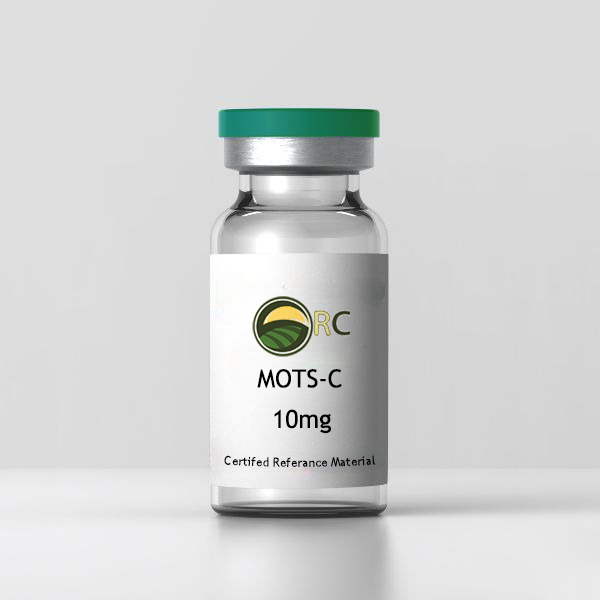
MOTS-C

Product Information

Price range: £40.60 through £108.28

Mitochondrial Biology & Metabolic Research: MOTS-C

MOTS-C (Mitochondrial Open Reading Frame of the 12S rRNA Type-C) is a 16-amino acid mitochondria-derived peptide that functions as a critical metabolic regulator. Unlike nuclear-encoded signalling molecules, it is encoded directly within the mitochondrial genome (mtDNA) and acts as a retrograde hormone. Upon activation under metabolic stress or contraction, it translocates to the cell nucleus to modulate gene expression, promote homeostasis, and regulate energy balance.

Technical & Product Specifications

  • Size: 10mg, 40mg

  • Purity: >99% Purity

  • Molecular Weight (M.Wt): 2179.4

  • Storage: Store at -20℃ (up to 3 years)

  • CAS No.: 1334505-78-0

  • Availability Status: Back in stock in 3-4 days

Key Physiological Pathways & Mechanisms

The biological activity of the mots-c peptide centres on its interaction with cellular energy-sensing mechanisms, making it an important focus in preclinical studies:

  • AMPK Pathway Activation: Directly stimulates 5′-AMP-activated protein kinase (AMPK), enhancing glucose uptake, GLUT4 translocation, and fatty acid oxidation without relying on pancreatic insulin pathways.

  • Folic Acid Cycle Interaction: Inhibits the folate cycle to increase intracellular 5-aminoimidazole-4-carboxamide ribonucleotide (AICAR) levels, driving endogenous metabolic adaptation.

  • Insulin Sensitivity & Lipid Homeostasis: Regulates systemic glucose metabolism and prevents diet-induced insulin resistance and hepatic lipid accumulation in cellular models.

  • Exercise Mimetic Response: Promotes physiological adaptations similar to physical exercise by boosting mitochondrial biogenesis and skeletal muscle energy output.

Research Assay Design & Dosage Parameters

Establishing an optimal mots-c dosage framework in in vitro models depends heavily on cell line sensitivity, incubation duration, and target receptor pathways. Researchers frequently evaluate concentration-response curves using a standardized mots-c peptide dosage chart to determine baseline kinetics for glucose clearance and AMPK phosphorylation.

When establishing experimental controls, consulting a validated mots-c dosage chart assists researchers in maintaining precise micromolar concentrations, minimizing non-specific background signals, and ensuring analytical reproducibility across multifold assays.

Sourcing High-Purity Research Compounds

For academic laboratories, biotechnology institutions, and analytical testing facilities, Receptor Chemicals provides high-purity research compounds backed by strict quality verification. Our commitment to analytical standards ensures structural integrity, high sequence fidelity, and batch-to-batch consistency for demanding bioenergetic research applications.

Description

Mitochondrial Biology & Metabolic Research: MOTS-C

MOTS-C (Mitochondrial Open Reading Frame of the 12S rRNA Type-C) is a 16-amino acid mitochondria-derived peptide that functions as a critical metabolic regulator. Unlike nuclear-encoded signalling molecules, it is encoded directly within the mitochondrial genome (mtDNA) and acts as a retrograde hormone. Upon activation under metabolic stress or contraction, it translocates to the cell nucleus to modulate gene expression, promote homeostasis, and regulate energy balance.

Technical & Product Specifications

  • Size: 10mg, 40mg

  • Purity: >99% Purity

  • Molecular Weight (M.Wt): 2179.4

  • Storage: Store at -20℃ (up to 3 years)

  • CAS No.: 1334505-78-0

  • Availability Status: Back in stock in 3-4 days

Key Physiological Pathways & Mechanisms

The biological activity of the mots-c peptide centres on its interaction with cellular energy-sensing mechanisms, making it an important focus in preclinical studies:

  • AMPK Pathway Activation: Directly stimulates 5′-AMP-activated protein kinase (AMPK), enhancing glucose uptake, GLUT4 translocation, and fatty acid oxidation without relying on pancreatic insulin pathways.

  • Folic Acid Cycle Interaction: Inhibits the folate cycle to increase intracellular 5-aminoimidazole-4-carboxamide ribonucleotide (AICAR) levels, driving endogenous metabolic adaptation.

  • Insulin Sensitivity & Lipid Homeostasis: Regulates systemic glucose metabolism and prevents diet-induced insulin resistance and hepatic lipid accumulation in cellular models.

  • Exercise Mimetic Response: Promotes physiological adaptations similar to physical exercise by boosting mitochondrial biogenesis and skeletal muscle energy output.

Research Assay Design & Dosage Parameters

Establishing an optimal mots-c dosage framework in in vitro models depends heavily on cell line sensitivity, incubation duration, and target receptor pathways. Researchers frequently evaluate concentration-response curves using a standardized mots-c peptide dosage chart to determine baseline kinetics for glucose clearance and AMPK phosphorylation.

When establishing experimental controls, consulting a validated mots-c dosage chart assists researchers in maintaining precise micromolar concentrations, minimizing non-specific background signals, and ensuring analytical reproducibility across multifold assays.

Sourcing High-Purity Research Compounds

For academic laboratories, biotechnology institutions, and analytical testing facilities, Receptor Chemicals provides high-purity research compounds backed by strict quality verification. Our commitment to analytical standards ensures structural integrity, high sequence fidelity, and batch-to-batch consistency for demanding bioenergetic research applications.
Additional information

Choose an Option

10mg, 40mg

Related Products